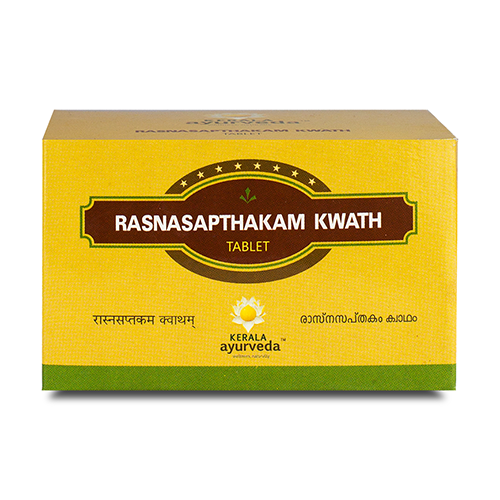
Rasnasapthakam Kwath Tablet
Text (Sarangadhara Samhitha)
Why Rasnasapthakam Kwath Tablet?
Rasnasaptakam Kwath is a tablet prepared out of herbal ingredients, which consist of water-soluble active principles. It contains Rasna and the other seven ingredients and hence named Rasnasapthakam Kwath. It is available as a dry coarse herb mixture, ready-made preparation and tablet.
Kerala Ayurveda's Rasnasapthakam Kwath Tablet is said to be beneficial in treating joint disorders and this ayurvedic antiinflammatory medicine for pain is also an anti-inflammatory and analgesic.
Additional benefits of Rasnasapthakam Kwath tablet include:
- It can help in balancing Vata and Kapha dosha.
- It is said to have analgesic and anti-inflammatory properties.
- It aids in the improvement of digestion.
- It is one of the prescriptions for pain relief and swelling in the body.
- It is herbal and has no known side-effects.
- It helps to support a healthy appetite, digestion, and elimination.
Ingredients Rasnasapthakam Kwath Tablet
- Rasna Aplinia galanga
- Trikantaka (Gokshura) Tribulus terrestris
- Eranda Ricinus communis
- Amrita (Guduchi) Tinospora cordifolia
- Devadaru Cedrus deodara
- Punarnava Boerhavia diffusa (Rakta Punarnava)
- Aragvadha Cassia fistula
- Shunthi churna
Inflammation - An Overview
Inflammation refers to the body’s process of fighting against things that harm it, such as infections, injuries, and toxins, in an attempt to heal itself. When something threatens to damage the cells, the body releases chemicals that trigger a response from the immune system, and inflammation is part of that immune response. It is a process that depends both on the physical actions of white blood cells and the chemicals that they produce: antibodies, cytokines, and the like. This response includes the release of antibodies and proteins, as well as increased blood flow to the damaged area.
Inflammation is classified into two main types:
Acute inflammation usually occurs for a short (yet often severe) duration. It often resolves in two weeks or less and the symptoms appear quickly. This type of inflammation restores the body to its state before injury or illness and there are five symptoms that may be signs of an acute inflammation,
which are:
Redness
- Heat
- Swelling
- Pain
- Loss of function
Chronic inflammation is a slower and generally less severe form of inflammation. It typically lasts longer than six weeks and can occur even when there’s no injury, and it doesn’t always end when the illness or injury is healed. Chronic inflammation has been linked to autoimmune disorders and even prolonged stress.
Examples of conditions that cause chronic inflammation include:
- Inflammatory arthritis, which covers a group of conditions distinguished by inflammation of joints and tissues (including rheumatoid arthritis, lupus, and psoriatic arthritis).
- Asthma, which causes inflammation of the air passages that carry oxygen to the lungs. Inflammation causes these airways to become narrow and breathing to become difficult.
- Periodontitis, which causes inflammation of gums and other supporting tooth structures. It is caused by bacteria triggered by local inflammation.
- Inflammatory bowel disease (IBD) refers to Crohn’s disease and ulcerative colitis. Both these conditions cause chronic inflammation in the gastrointestinal (GI) tract that eventually causes damage to the GI tract.
Inflammation is a defense mechanism in the body so when the immune system recognizes damaged cells, irritants, and pathogens, it begins the healing process. When something harmful or irritating affects a part of the body, there is a biological response to try to eliminate the foreign body.
There are many factors that can lead to inflammation, including:
- Certain medications
- Exposure to irritants or foreign materials the body can’t easily eliminate
- Recurrent episodes of acute inflammation can also lead to a chronic inflammatory response.
- Pathogens (germs) like bacteria, viruses or fungi
- External injuries like scrapes or damage through foreign objects (for example a thorn in your finger)
- Effects of chemicals or radiation
There are also certain types of foods that can cause or worsen inflammation in people with autoimmune disorders. These foods include sugar, refined carbohydrates, alcohol, processed meats, and trans fats.
When inflammation occurs, chemicals from the body's white blood cells are released into the blood or affected tissues to protect the body from foreign substances. This release of chemicals increases the blood flow to the area of injury or infection and may result in redness and warmth. Some of the chemicals cause a leak of fluid into the tissues, resulting in swelling. This protective process may stimulate nerves and cause pain. The increased number of cells and inflammatory substances within the joint cause irritation, swelling of the joint lining and, eventually, wearing down of cartilage.

 Brand Wise Product List hot
 Shop by Wellness
 Everyday Ayurveda Essentials trending
 Classical Ayurvedic Formulations
 Natural Baby & Mom Care
 Organic & Natural Foods
 Kottakkal Joint & Mobility Care trending
 Ayurvedic Immunity Boosters
 Himalaya Wellness Pure Herbs
 Wellness Devices & Tools
 Ayurvedic Practice Essentials
 Books & Audio Guides







Log In