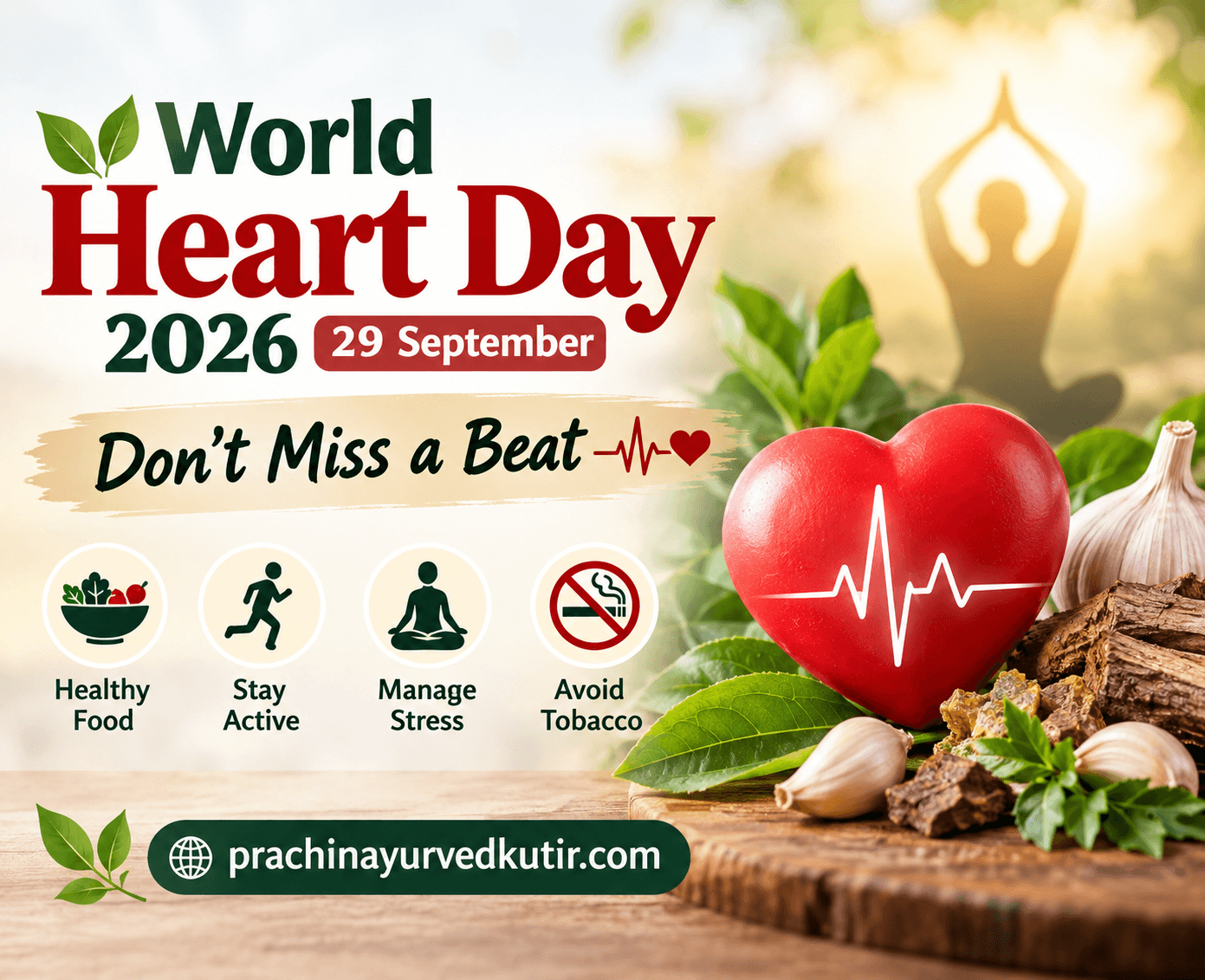
World Heart Day 2026: Heart Health, Hridroga & Ayurvedic Wellness
What can you do every day to protect your heart?
Every heartbeat is a reminder that your heart is working continuously to support your life. Yet, heart health is often something we think about only when a problem appears.
World Heart Day 2026, observed on 29 September, brings that conversation back into focus with the message “Don’t Miss a Beat.” The 2026 campaign by the World Heart Federation highlights the importance of recognising signs and symptoms of cardiovascular disease, protecting heart health and taking action.
For people in India and around the world, World Heart Day is an opportunity to learn more about cardiovascular health and make small, sustainable changes to everyday habits.
What Is World Heart Day?
World Heart Day is observed every year on 29 September to raise awareness about cardiovascular disease (CVD), heart health and the importance of prevention.
The World Heart Federation describes cardiovascular disease as the world's leading killer and uses World Heart Day to bring people, organisations and communities together around heart health.
The 2026 message is:
Don't Miss a Beat
The message encourages people to recognise warning signs, understand their cardiovascular risk factors and take practical steps to protect heart health.
Why Is Heart Health So Important?
According to the World Health Organization, cardiovascular diseases are the leading cause of death globally. WHO estimates that 19.8 million people died from cardiovascular diseases in 2022, representing approximately 32% of all deaths worldwide. About 85% of these deaths were due to heart attack and stroke.
The encouraging message is that many cardiovascular risk factors can be prevented or managed.
WHO identifies important behavioural risk factors including unhealthy diet, physical inactivity, tobacco use and harmful alcohol use. Other factors such as high blood pressure, raised blood glucose, raised blood lipids and overweight or obesity can also increase cardiovascular risk.
This means that caring for your heart is not only about treatment after disease develops. It is also about awareness, prevention, healthy habits and timely medical care.
How Can You Support Heart Health Naturally?
There is no single food, herb or lifestyle habit that guarantees protection from heart disease. Instead, heart health is supported by a combination of healthy habits practiced consistently.
Eat a Heart-Friendly Diet
A balanced diet can include:
- Leafy green vegetables
- Seasonal fruits
- Whole grains
- Pulses and legumes
- Nuts and seeds
- A variety of fresh, minimally processed foods
It is also sensible to limit excess salt, added sugars and highly processed foods.
WHO recommends reducing important cardiovascular risk factors through healthier dietary choices, regular physical activity and avoidance of tobacco.
The goal is not a “perfect diet” for one day.
The goal is a healthier pattern that you can maintain for years.
Keep Moving
Your heart benefits from regular physical activity.
Walking, cycling, swimming, yoga, dancing and other suitable forms of movement can become part of a heart-conscious lifestyle.
For World Heart Day 2026, the World Heart Federation's Keep the Beat initiative encourages people to undertake 20 minutes of movement each day during September. Walking, cycling, running, dancing and other activities can count.
Even small changes can help make an inactive routine more active.
Avoid Tobacco
Smoking and tobacco exposure increase cardiovascular risk.
Avoiding tobacco is one of the important steps towards protecting heart health.
Prioritise Good Sleep
Sleep is another important part of overall wellbeing.
Aim for regular, adequate and good-quality sleep and try to maintain a consistent daily routine.
Maintain a Healthy Weight
Healthy eating and regular physical activity can support healthy weight management and help address several cardiovascular risk factors.
Rather than focusing only on a number on the weighing scale, think about your overall lifestyle, physical activity, diet and health indicators.
Manage Stress
Modern life can make stress feel unavoidable.
Yoga, meditation, mindfulness, adequate rest, time outdoors and healthy daily routines can support overall wellbeing and may help you develop better ways of managing everyday stress.
What Does Ayurveda Say About the Heart?
The heart has been important in Ayurvedic thought for centuries.
In Ayurveda, Hridaya refers to the heart and has an important place in the body's overall functioning. Classical Ayurvedic literature also describes Hridroga, a group of disorders involving the heart region.
The Ayurvedic understanding of Hridroga involves concepts such as Dosha, Dushya and Srotas, providing a traditional framework for understanding disorders affecting Hridaya.
It is important, however, to distinguish between the classical Ayurvedic understanding of Hridroga and modern medical diagnoses such as coronary artery disease, heart failure or myocardial infarction. The terminology and explanatory frameworks are not identical.
Which Ayurvedic Herbs Are Traditionally Associated With Heart Health?
Several herbs have a long history of traditional Ayurvedic use in relation to Hridaya and cardiovascular wellbeing.
Arjuna — Terminalia arjuna
Arjuna is one of the best-known Ayurvedic herbs traditionally associated with heart health and is found in several classical Ayurvedic formulations.
Lasuna — Allium sativum
Lasuna, commonly known as garlic, has a long history of traditional use in Ayurveda. Garlic has also been studied in modern nutrition and health research.
Guggulu — Commiphora mukul
Guggulu is an important herb in traditional Ayurveda and is used in numerous classical formulations.
Ashwagandha — Withania somnifera
Ashwagandha is traditionally used in Ayurveda for general wellbeing and stress-related support.
Pushkaramoola — Inula racemosa
Pushkaramoola is another traditional Ayurvedic herb associated with Hridaya and respiratory health.
Important Note About Ayurvedic Herbs and Heart Disease
Traditional Ayurvedic use should not be interpreted as proof that an herb can prevent, treat or cure cardiovascular disease.
If you have heart disease, high blood pressure, high cholesterol, diabetes or another medical condition, do not stop or change prescribed medicines without speaking with your healthcare professional.
Ayurvedic medicines and supplements should be selected appropriately, particularly when a person is already taking prescription medicines.
What Are the Warning Signs of Heart Problems?
One of the key messages of World Heart Day 2026 is that cardiovascular disease can sometimes hide in plain sight. The World Heart Federation is highlighting symptoms that may go unnoticed or be dismissed.
Possible warning signs can include:
- Chest discomfort, pressure or pain
- Shortness of breath
- Fainting or severe dizziness
- Unusual sweating
- Sudden or unexplained concerning symptoms
These symptoms can have different causes, but sudden or severe symptoms should not be ignored.
If you or someone around you develops possible signs of a heart attack or another medical emergency, seek urgent medical attention.
Can Ayurveda Replace Heart Medicines?
No.
Ayurveda and modern medicine have different approaches and should not be presented as interchangeable.
People taking medicines for cardiovascular conditions should continue following their healthcare professional's advice. Ayurvedic products should not be used to replace prescribed medicines or delay necessary medical evaluation.
Ayurveda can be explored as part of traditional wellness practices, but decisions about cardiovascular disease treatment should be made with appropriate medical guidance.
Frequently Asked Questions About World Heart Day 2026
When is World Heart Day 2026?
World Heart Day 2026 is observed on 29 September 2026.
What is the theme of World Heart Day 2026?
The World Heart Federation's 2026 campaign message is “Don't Miss a Beat.” The campaign focuses on recognising signs and symptoms of cardiovascular disease and taking action to protect heart health.
Why is World Heart Day celebrated?
World Heart Day raises awareness about cardiovascular disease, heart health, prevention, risk factors and the importance of recognising warning signs and seeking appropriate care.
What is Hridroga in Ayurveda?
Hridroga is an Ayurvedic term used in classical literature for disorders involving the heart region. Ayurveda discusses Hridroga through traditional concepts including Dosha, Dushya and Srotas.
Which Ayurvedic herbs are traditionally associated with heart health?
Traditional Ayurvedic herbs associated with Hridaya include Arjuna, Lasuna, Guggulu, Ashwagandha and Pushkaramoola. Their traditional use should not be confused with proven treatment for cardiovascular disease.
What is the best way to protect heart health?
There is no single solution. Heart health can be supported through a combination of healthy eating, regular physical activity, avoiding tobacco, maintaining a healthy weight, managing stress, getting adequate sleep, knowing important health risk factors and seeking appropriate medical care.
Don't Miss a Beat
World Heart Day is more than a date on the calendar.
It is a reminder to pause and ask:
- Am I eating well?
- Am I moving enough?
- Am I sleeping well?
- Do I know my important heart-health risk factors?
- Am I paying attention to warning signs?
Small, consistent choices can become powerful long-term habits.
This World Heart Day 2026, take a moment to care for the heart that never stops working for you.
Know your risks. Eat mindfully. Keep moving. Manage stress. Don't ignore the signs.
Don't Miss a Beat.
Prachin Ayurved Kutir
India's Global Ayurveda Store • Since 2009
Explore Ayurvedic medicines, herbs and traditional wellness products from trusted Ayurvedic brands.
prachinayurvedkutir.com
Prevention is better than cure.
References
World Health Organization — Cardiovascular Diseases
World Heart Federation — World Heart Day 2026
 Brand Wise Product List hot
 Shop by Wellness
 Everyday Ayurveda Essentials trending
 Classical Ayurvedic Formulations
 Natural Baby & Mom Care
 Organic & Natural Foods
 Kottakkal Joint & Mobility Care trending
 Ayurvedic Immunity Boosters
 Himalaya Wellness Pure Herbs
 Wellness Devices & Tools
 Ayurvedic Practice Essentials
 Books & Audio Guides