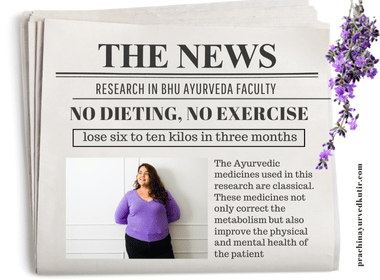
Research in BHU Ayurveda Faculty: No dieting, no exercise, lose six to ten kilos in three months
In an important research, scientists of the Department of Physical Medicine in the Faculty of Ayurveda of the Institute of Medical Sciences of BHU have found a cure for the rapidly increasing obesity in the world. They have succeeded in reducing six to ten kilos of weight in three months.
Varanasi, Shailesh Asthana: If you are becoming obese due to your busy and irregular routine and are not able to take out time for yoga and exercise, then there is a good news. In an important research, scientists of the Department of Physical Medicine in the Faculty of Ayurveda of the Institute of Medical Sciences of BHU have found a cure for the rapidly increasing obesity in the world. In an experiment conducted on two groups of 82 patients, scientists have succeeded in reducing weight by six to ten kilos in three months
This was possible only by using classical medicines of Ayurveda. The special thing is that far from causing any side effects, these medicines only increased the internal physical strength of the person. Diabetes, hypertension and sugar levels decreased, the amount of bad cholesterol which increases blood pressure decreased and good cholesterol increased. Not only this, the result of evaluation of two parameters physical and psychological out of the four parameters of quality of life of World Health Organization (WHO) i.e. physical, psychological, environmental and social were also found to be encouraging.
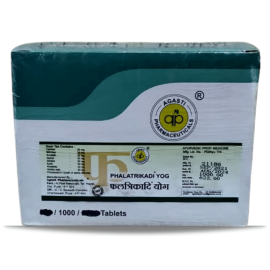
The study was conducted for three monthsThis research has been done by MD student Dr. Meenu under the guidance of Associate Professor Dr. Ajay Pandey. Dr. Meenu told that during the research two groups of 82 obese patients aged between 40 to 60 years were formed. One group of 42 patients was given one tablet of Phaltrikadi Ghanvati with 40 ml of Lekhaniya Mahakashaya Kwath three times a day for three months. The second group of 40 patients was given the prescribed dose of Metformin-500 mg, a medicine used in modern medical science, once a day.
Three to four times better results
When the health of the patients of both the groups was tested after three months, the result was surprising. In comparison to the group taking allopathic medicines, the weight of the people taking Ayurvedic medicines decreased by three to four times. Not only this, abdominal obesity and waist circumference also started decreasing.
Improvement seen on every parameterThe group taking Ayurvedic medicine reduced its average weight by 6-10 kg in three months, whereas the group taking allopathic medicine reduced its weight by 2-3 kg. Body mass index (BMI) reduced from 30 to 27 on an average due to Ayurvedic medicine. In allopathic medicine it was 29.7 to 29.5. The abdominal obesity of the people in the first group also reduced from 120 to 114 cm on an average, while Metformin-500 reduced it from 119.9 to 119.6 cm.
With Ayurveda the amount of cholesterol (TGL) reduced from 290 to 166.3 mg/dL whereas with allopathic medicine it reduced only from 277.6 mg/dL to 263.5 mg/dL. Good cholesterol (HDL) of people in the first group increased from 36.68 mg/dL to 50.87 mg/dL whereas that of those taking allopathic medicine increased from 35.94 to 36.82 mg/dL. With ayurvedic medicine the sugar (fasting) of patients was found to reduce from 138.3 to 108.29. Whereas with allopathic medicine it came down from 144.59 to 106.8. The average blood pressure (systolic) of those taking ayurvedic medicine reduced from 130 to 118 whereas with allopathic medicine it reduced from 130 to 120.
On the WHO quality of life parameters, people in the group taking Ayurvedic medicines were found to be better physically and psychologically. These parameters are determined on the basis of answers to 26 questions. On the other hand, those taking allopathic medicines remained unaffected on both these parameters.
Phaltrikadi Ghanvati: is a medicinal tablet described in the Ayurvedic text 'Yog Ratnakar'. It contains Triphala (Harr, Baheda, Amla) and Trikatu (dried ginger, black pepper, long pepper).
Lekhaniya maha kashay is one of the 50 Mahakashayas mentioned in 'Charak Samhita'. It contains Nagarmotha, Kushta, Kutki, Vacha (Balvaj), Haridra (Turmeric), Chitrak (Chirayta), Chirbil (Chilbil), Hemvati, Ativisha.
The Ayurvedic medicines used in this research are classical
The Ayurvedic medicines used in this research are classical. These medicines not only correct the metabolism but also improve the physical and mental health of the patient. Modern medicine does not have a single medicine which is so effective on so many diseases. Many medicines have to be taken for these diseases, but this medicine alone has been found to be effective in curing many diseases and keeping us healthy.
-Dr. Ajay Pandey (Associate Professor, Department of Physical Medicine, Faculty of Ayurveda, BHU)
caption
Dr. Meenu makes a worth writing Mahakashay in the lab of the Faculty of Ayurveda, BHU. Source Jagran
Dr. Ajay Pandey, Associate Professor, Faculty of Ayurveda, BHU. Source- Jagran
 Brand Wise Product List hot
 Shop by Wellness
 Everyday Ayurveda Essentials trending
 Classical Ayurvedic Formulations
 Natural Baby & Mom Care
 Organic & Natural Foods
 Kottakkal Joint & Mobility Care trending
 Ayurvedic Immunity Boosters
 Himalaya Wellness Pure Herbs
 Wellness Devices & Tools
 Ayurvedic Practice Essentials
 Books & Audio Guides